Articles

West County Vision Center Blog

West County Vision Center Blog is your trusted source for informative articles, expert insights, and valuable tips related to eye health and vision care. Explore a wealth of knowledge on topics ranging from eye conditions, vision correction options, to maintaining optimal eye wellness. Stay informed and prioritize your eye health with our engaging and educational blog content.

Colored Contacts

Colored Contacts

Colored contacts have become increasingly popular over the years as a way to enhance your look and experiment with different eye colors. Whether you want to change your eye color for a special occasion or simply for everyday wear, colored contacts offer a fun and versatile option.

Different Types of Colored Contacts

When it comes to colored contacts, there are various types to choose from, depending on your preferences and needs. The three main categories are cosmetic, enhancement, and opaque lenses.
 

Cosmetic lenses are designed to completely change the color of your eyes. These lenses come in a wide range of shades, from natural hues such as blue, green, and brown, to more vibrant colors like purple, gray, and even red. Cosmetic lenses can create a dramatic transformation and give you the eye color you desire.
 

Enhancement lenses, on the other hand, are designed to enhance your natural eye color rather than change it completely. They add depth and intensity to your eyes, making them appear brighter and more vibrant. Enhancement lenses are ideal if you want a subtle change that enhances your natural beauty.
 

Opaque lenses are specifically designed to cover dark-colored eyes. They are ideal for individuals with naturally dark eyes who want to achieve a lighter or more vibrant eye color. Opaque lenses are often used in theatrical or costume applications as they can create a striking and captivating look.

Read more
Newton

Newton

Newton™

Newton™, formerly Neurolens®, is the first and only prescription lenses that include an element of contoured prism in their design. This prism is designed to bring the patient’s eyes into more equal alignment, and this should help to provide relief from the symptoms that are associated with several eye misalignment conditions, including digital eye strain and binocular vision dysfunction.

What is digital eye strain?
Digital eye strain is the name given to describe a group of symptoms that can occur when someone spends long periods of time using digital devices. Since using digital devices requires the eyes to work harder than normal and we don’t always position our devices the perfect distance away, it can lead to issues such as eye pain, dry and irritated eyes, eye fatigue, light sensitivity, and blurred vision. Unsurprisingly, the number of people who are experiencing digital eye strain has grown significantly over the last few years and is expected to continue to do so.

What is binocular vision dysfunction?
Binocular vision dysfunction, also known as BVD for short, is another eye condition but is one that is very misunderstood. Binocular vision dysfunction occurs when the eyes aren’t perfectly aligned, causing your brain and eyes to work harder than normal in order to create a clear visual image and remain focused. This places pressure on the trigeminal nerve, which is the nerve that is responsible for the majority of the sensations that we experience in our head and back. BVD can often manifest as other things owing to the huge range of symptoms that are associated with the condition. These can include, but aren’t limited to:
 

  • Blurred vision

  • Headaches/migraines

  • Double vision

  • Motion sickness

  • Vertigo

  • Dizziness

  • Anxiety


Many people don’t think to visit an eye doctor when they are experiencing these symptoms, but all can occur simply because the eyes are out of alignment.

Read more
Post-Concussion Syndrome

Post-Concussion Syndrome

Post-concussion syndrome (PCS) is a complex condition that can occur after a traumatic brain injury (TBI), such as a concussion. While the initial injury may have healed, the lingering symptoms can significantly impact your daily life, making it challenging to return to your normal routines and activities.

What is Post-Concussion Syndrome?

Post-concussion syndrome is a collection of physical, cognitive, and emotional symptoms that can persist for weeks, months, or even years after a head injury. Unlike the typical recovery from a concussion, which usually resolves within a few days or weeks, PCS can be a prolonged and debilitating experience. The symptoms of PCS can vary widely from person to person, making it a complex and often misunderstood condition.

Causes of Post-Concussion Syndrome

One of the primary causes of post-concussion syndrome is the disruption of the brain’s normal function due to the injury itself. When the brain experiences trauma, it can lead to a variety of biochemical and structural changes, which may cause the ongoing symptoms of PCS. The severity of the concussion does not always correlate with the likelihood of developing PCS; even minor concussions can lead to prolonged post-concussion symptoms in some individuals.

Another contributing factor to PCS may be related to the individual’s psychological response to the injury. Anxiety, stress, and pre-existing mental health conditions can exacerbate the symptoms of PCS and prolong the recovery process. People who have a history of migraines, anxiety disorders, or depression may be more prone to developing post-concussion syndrome.

Recognizing the Symptoms of Post-Concussion Syndrome

The symptoms of post-concussion syndrome can be diverse and can vary in severity from person to person. Some of the most common symptoms include:
 

  • Physical Symptoms: Headaches, dizziness, nausea, sensitivity to light or sound, fatigue, and sleep disturbances.

  • Cognitive Symptoms: Difficulty concentrating, memory problems, slower processing speed, and reduced problem-solving abilities.

  • Emotional Symptoms: Irritability, mood swings, anxiety, depression, and increased emotional sensitivity.


The presence and severity of these symptoms can fluctuate over time, making it crucial to monitor your condition closely and communicate any changes to your primary care or eye doctor.

Read more
EnChroma Lens Technology

EnChroma Lens Technology

If you find it difficult to tell colors apart, you may be color blind. Color blindness, or color deficiency, is estimated to affect around 8% of men and about 1% of women, but for those affected, it can significantly impact the quality of their day-to-day life. Contrary to popular belief, being color blind doesn’t mean that you can’t see any color at all. Instead, patients simply struggle to differentiate between certain colors. The vast majority of people who are color blind find it impossible to tell the difference between varying shades of red and green. You may hear this referred to as red-green color deficiency. However, this doesn’t only mean that they mix up red and green. They can also mix up colors that have some green or red light as part of their whole colors, for example purple and blue. This is because they are unable to see the red light that forms part of the color purple. 

As you can probably imagine, this type of visual impairment can be a problem for things like traffic lights, taking medications and even looking at signs and directions. For example, someone who is color blind may find that the green on a traffic light may appear white or even blue.

Read more
Medical Eye Exam

Medical Eye Exam

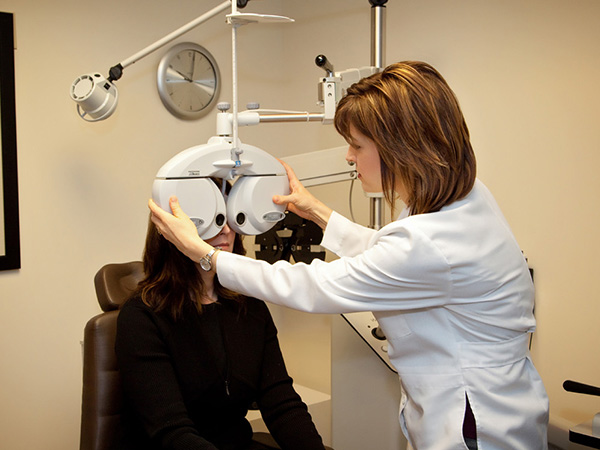
Medical eye exams are comprehensive evaluations of the health and function of the eyes, essential for maintaining optimal vision and preventing potential eye conditions. Regular medical eye exams are fundamental for proactive eye health management and ensuring ongoing visual wellness.
 

What is a Medical Eye Exam?

A medical eye exam is a comprehensive examination of your eyes conducted by an optometrist. This examination goes beyond a routine vision test and delves into the overall health of your eyes. During a medical eye exam, various tests will be performed to assess your visual acuity, peripheral vision, eye movement, and the health of your eye structures.

Medical eye exams can detect early signs of eye conditions that may not present noticeable symptoms in their initial stages. By diagnosing these conditions early, you have a greater chance of successful treatment and preventing further deterioration of your vision.

Medical eye exams can also identify underlying health conditions that may manifest in your eyes, providing an opportunity for early intervention and management.
 

Common Conditions Detected During a Medical Eye Exam

During a medical eye exam, several common eye conditions can be detected, even before noticeable symptoms occur. One such condition is age-related macular degeneration (AMD), which affects the central part of the retina responsible for sharp, central vision. By examining the retina, your optometrist can identify early signs of AMD and recommend appropriate treatment to slow its progression.

Another condition that can be detected during a medical eye exam is cataracts. Cataracts occur when the lens of your eye becomes cloudy, leading to blurred vision. Through a comprehensive examination, your eye doctor can assess the severity of your cataracts and recommend the most suitable treatment option, which may include surgery to remove the cloudy lens.

Hypertension is a common health condition that can have serious consequences if left untreated. The health of your eyes can provide valuable insights into your cardiovascular health. During a medical eye exam, an optometrist can observe changes in the blood vessels of your retina, such as narrowing or leaking. These changes can indicate underlying hypertension.

Read more
Hybrid Contacts

Hybrid Contacts

Contact lenses have become a popular choice for individuals who want to correct their vision without the hassle of wearing glasses. Traditional contact lenses have been around for decades, offering a convenient alternative to eyeglasses. However, advancements in technology have given rise to a new type of contact lens – hybrid contacts.
 

What Are Hybrid Contacts?

Hybrid contacts are a revolutionary type of contact lens that combine the best features of both soft and rigid gas permeable (RGP) lenses. The rigid center corrects vision by providing precise clarity, while the soft skirt offers comfort and stability. This unique combination allows for the benefits of both types of lenses to be experienced simultaneously.

The central RGP lens of a hybrid contact is made from a rigid material that allows oxygen to pass through to the cornea, ensuring ample oxygen supply to the eyes. This ensures the overall health of the eyes, preventing dryness and reducing the risk of complications associated with limited oxygen flow.

Read more
Eyelid Hygiene

Eyelid Hygiene

Eyelid hygiene is an essential aspect of maintaining optimal eye health. Your eyes are sensitive organs that require proper care and attention. Neglecting eyelid hygiene can lead to various problems, including dry eye.
 

Recognizing the Symptoms of Eyelid Problems

It is crucial to recognize the symptoms of eyelid problems to seek timely treatment and prevent further complications. Common symptoms of eyelid issues include redness, swelling, itching, irritation, crusting or scaling of the eyelids, sensitivity to light, and a sensation of something in the eye.
 

The Importance of Eyelid Hygiene in Maintaining Eye Health

Maintaining proper eyelid hygiene is essential for overall eye health. Regularly cleaning your eyelids helps remove debris, bacteria, and excess oil, preventing infections and inflammation. It also promotes the proper functioning of the meibomian glands, ensuring an adequate supply of tears to keep your eyes moisturized. By incorporating eyelid hygiene into your daily routine, you can significantly reduce the risk of developing dry eye and other eye-related problems.

Read more
Types of Daily Contact Lenses

Types of Daily Contact Lenses

Wearing contact lenses gives patients the flexibility and freedom to live life to the fullest, without some of the difficulties presented by wearing glasses. Many people who choose contact lenses do so because they don’t like the way that glasses look or feel, or because wearing glasses compromises their ability to perform certain tasks or activities, such as sports or jobs that require the use of safety goggles. 

There are lots of different contact lenses to choose from, with two of the most popular being daily disposables and toric lenses. 
 

Disposable Lenses

As their name suggests, these daily contact lenses are disposable. This means that they can and should be discarded at the end of each day rather than re-worn. Disposable lenses do tend to be a little more expensive than some repeat-wear varieties, but the benefits usually outweigh the cost. 

Some of the advantages of choosing daily disposable contact lenses include:

  • You don’t have to clean them, which saves patients a great deal of time and hassle. It also helps save money in terms of the ongoing cost of cleaning solution. 

  • Disposable lenses are also great for people with eye allergies. This is because with ordinary lenses, there’s an opportunity for deposits and microorganisms to build up. With daily disposables, allergens have less chance to attach themselves to the lenses and cause irritation and other allergy symptoms. 

  • You don’t need to schedule regular replacements either, which makes wearing contact lenses easier on your schedule. 

  • Disposable contact lenses are particularly good for people who have busy lives and are likely to cut corners when it comes to caring for their eyes or contacts since there is no cleaning or maintenance required.
     

Daily disposable contact lenses are available in a wide range of prescriptions, including those for patients with nearsightedness and farsightedness. Your eye doctor will be able to advise you if you are a candidate for disposable contact lenses. 

Read more
Lens Technology

Lens Technology

Thanks to the advancement of lens technology, glasses lenses are no longer a single, one size fits all solution. There are a variety of different lens types that can be used in glasses, giving patients greater flexibility and control over their vision than ever before.

Single Vision Lenses

Also known as monovision lenses, these lenses are designed to correct the wearer’s vision at just one distance, and have a single prescription covering the entire surface of the lens. They are most often recommended for people who are either nearsighted (myopia) or farsighted (hyperopia) and who need glasses for a specific activity, such as driving or reading.

Progressive Lenses

Progressive lenses are multifocal lenses that can correct a patient’s vision at different working distances, ranging from far distance to reading distance. However, rather than designating different areas on the lenses for different distances with visible lines separating them, progressive lenses have a gradual change so that the wearer can smoothly transition from one lens power to another.

Bifocal and Trifocal Lenses

As you may have guessed from the name, bifocal and trifocal lenses have either two or three lens powers depending on which type you choose. Bifocal lenses support distance vision in the top half of the lens, and near vision in the lower half. Trifocal lenses support distance vision in the top third of the lens, intermediate vision in the middle segment and near vision in the bottom third. Whichever variety you choose, you will see visible lines separating each segment.

Bifocal and trifocal lenses are recommended for patients who are near or farsighted, and those who develop presbyopia, which is the natural hardening of the eye lens, that occurs as we get older. Presbyopia makes it harder for the lens of the eye to adapt to focus at different distances.

Multifocal Lenses

Multifocal lenses are the alternative name given to bifocal, trifocal and progressive lenses.

Read more
all eye care services
All Eye Care Services

Find personalized eye care excellence with our comprehensive services. From eye exams to advanced diagnostics, trust us for all your vision needs.

contact us
Keep In Touch

For non-urgent questions or to learn more about our services, contact us today!